STOP AUDIT FAILURE: The 5 Critical Mistakes Your Team Makes in Pressure Calibration email us today info@addit-metrology.com
Unlock the Future: Your Calibration Certificate is a Data Goldmine, Not Just a Receipt
Your Calibration Certificate is a Data Goldmine
Bradley Hemple
11/3/20253 min read

Unlock the Future: Your Calibration Certificate is a Data Goldmine, Not Just a Receipt
In the world of industrial processes, manufacturing, and quality assurance, calibration is a non-negotiable step. We meticulously send our instruments off, eagerly await their return, and then... receive that all-important piece of paper: the calibration certificate.
For many, this certificate is simply proof of compliance, a document to file away for the next audit. It's a "pass" or "fail" mark, a necessary evil, and ultimately, just a receipt for a service rendered.
But what if we told you that perspective is costing you money, efficiency, and potentially even safety?
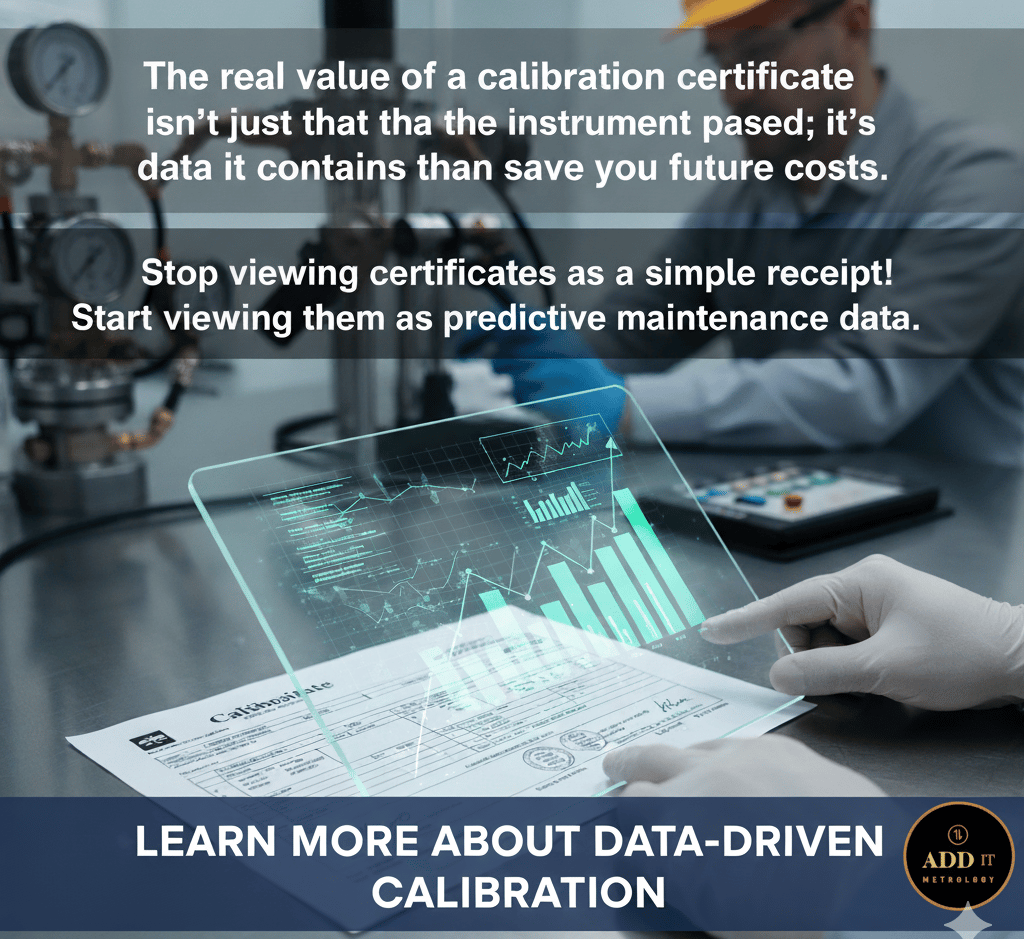
As our visual reminds us: "The real value of a calibration certificate isn't just that the instrument passed; it's the data it contains that can save you future costs. Stop viewing certificates as a simple receipt! Start viewing them as predictive maintenance data."
The Hidden Power of Your Calibration Data
Think of your calibration certificates not as static documents, but as dynamic datasets waiting to be analyzed. Each certificate is a snapshot of your instrument's health, its performance trends, and its operational history. When viewed collectively, this data unlocks a world of possibilities:
Predictive Maintenance, Not Reactive Failure:
Beyond "Pass/Fail": Instead of just noting if an instrument passed, delve into the "As Found" data. Was it barely within tolerance? Was there significant drift from its last calibration? This drift data is gold! It can signal that your instrument is degrading, allowing you to shorten its calibration interval proactively before it goes out of tolerance and causes an issue in your process.
Optimized Schedules: No more arbitrary 12-month calibration cycles. By analyzing drift rates, you can extend intervals for stable instruments, saving costs, and shorten them for problematic ones, preventing costly downtime and quality deviations.
Enhance Process Control & Quality:
Measurement Uncertainty (MU): Certificates often include Measurement Uncertainty (MU). Understanding this helps you ensure your instruments are capable of meeting the tight tolerances of your specific process. If MU is too high, you might need better equipment or a different calibration strategy.
Root Cause Analysis: If a product batch fails quality control, your calibration data can be a critical piece of the puzzle. Was an instrument drifting? Was it out of tolerance? The certificate provides the documented proof needed for thorough investigations.
Cost Savings & Efficiency Gains:
Reduced Rework: Catching instrument drift early means fewer defective products or process excursions that lead to expensive rework or scrap.
Targeted Investment: Identify which instrument types are prone to drift or failure. This informs better purchasing decisions for more robust equipment in the future.
Streamlined Audits: With well-organized, data-rich calibration records, audits become a breeze, demonstrating your commitment to continuous improvement and compliance.
Making the Shift: From Paper to Predictive
Transitioning to a data-driven calibration strategy doesn't have to be overwhelming. It starts with a mindset shift and the right tools.
Digitize Everything: If you're still relying solely on paper certificates, it's time to digitize. Implement a robust digital asset management system (CMMS or dedicated calibration software) where all certificates and their associated data can be stored and easily accessed.
Analyze the Trends: Don't just file, analyze! Look for patterns in "As Found" and "As Left" data, drift rates, and adjustment histories.
Partner with Experts: A metrology partner who understands data analytics can help you extract maximum value from your calibration program.
At ADD IT METROLOGY, we believe calibration is more than just a service – it's an opportunity for continuous improvement and operational excellence. We empower our clients to leverage their calibration data for smarter, more cost-effective decision-making.
Is your organization fully leveraging the data in your calibration certificates? What insights have you gained from analyzing your calibration history? Share your experiences in the comments below!
LEARN MORE ABOUT DATA-DRIVEN CALIBRATION
Training
Ready to enhance your team's pressure metrology expertise?
Contact our training specialists today to discuss your specific requirements, inquire about course schedules, or request a detailed proposal for customised training.
Consultation
info@addit-metrology.com
+44 7498 956 496
© 2025. All rights reserved.